
That’s Technically True...
How Jewish thought exposes the falsehoods hidden inside technical truth

Breaking News!
A private school has fired a beloved teacher after an internal investigation.
“Good evening,” the host says, leaning into the camera. “This is Richard Reker, coming to you with the hard questions and the real answers.”
He pauses.
“All across the country, Americans are asking the same thing tonight: what happened at Middle-bury High?”
The screen behind him shows a photograph of the school, then a smiling yearbook photo of the teacher, then a darkened image of the headmaster walking past reporters.
“After years of scandals, cover-ups, secret settlements, and powerful people protecting their own, parents are tired of being told to be quiet. They are tired of being told, ‘Trust the institution.’ They are tired of watching elites close ranks while ordinary families are kept in the dark.”

He raises his eyebrows.
“So when we reached out to Middle-bury High for answers, their response was deafening.”
Another pause.
“They refused to give us a single comment.”
The chyron flashes:
WHAT IS MIDDLE-BURY HIDING?
The host continues:
“Why won’t the school release the full report? What are they protecting? Parents deserve answers. Now, I want to be very clear: I am not saying the headmaster covered anything up. I am not saying a crime was committed. I am simply asking why an innocent institution would act so guilty.”
He turns to his guest.
“Here to discuss this is longtime friend of the show and former Navy security officer Joe Smith.”
Smith nods gravely.
“Well, Richard, in the security world we have a saying: where there’s smoke, there’s fire. The timing is suspicious. The silence is suspicious. And frankly, this is the classic pattern. People don’t hide information unless they’re guilty or covering for someone who is.”
By the end of the segment, the audience knows exactly what it is supposed to believe. The school and its leadership are covering up a scandal- they are covering up a crime.
No one says the headmaster protected an abuser.
No one says the school endangered children.
No one says the teacher was innocent.
They do not have to.
And if anyone objects, the defense is already built in:
“We never accused anyone. We were just asking questions.”
That Is The Loophole
The lie was never spoken.
The falsehood was manufactured.
Modern discourse often treats a lie and a falsehood as morally different acts. A lie is condemned because it is knowingly false. But a falsehood, if assembled through implication, omission, selective framing, and plausible deniability, can pass as commentary.
Take for example Tucker Carlson on Fox news.
When Carlson was sued for defamation by Karen McDougal, Fox’s successful defense did not rest on the claim that Carlson had carefully reported the facts. It rested on something far more revealing: that the show’s format, tone, and reputation signaled to viewers that Carlson was engaging in political opinion, rhetorical exaggeration, and hyperbole rather than literal factual reporting. The court concluded that the challenged statements were “rhetorical hyperbole and opinion commentary intended to frame a political debate,” and therefore were not actionable as defamation.
This matters because the legal question and the moral question are not the same.
The legal question is narrow: did the speaker make a specific, provably false statement of fact that satisfies the elements of defamation?
But the moral question is broader: did the speaker construct a false reality for the audience?
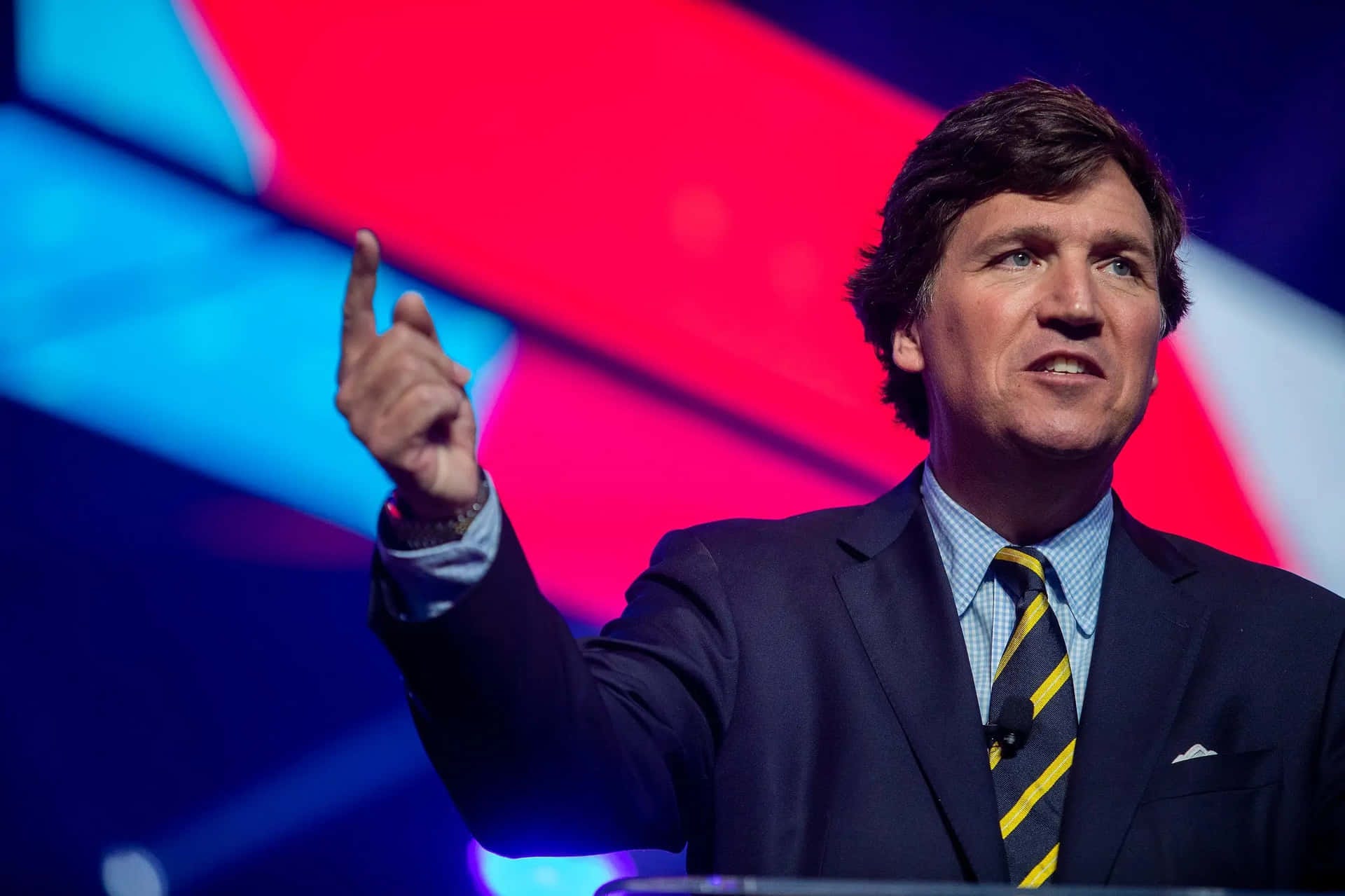
Carlson’s case exposes the gap between those two standards. A host can speak in the visual grammar of news a desk, chyron, guests, breaking updates, serious tone, institutional authority while legally retreating into the category of entertainment, opinion, or rhetorical exaggeration when challenged. The performance says, “Believe me.” The defense says, “You should have known not to.”
That is the essence of the loophole.
The lie does not need to appear as a sentence. It can appear as a structure.
It can appear as a question:
“Why are they hiding the truth?”
It can appear as a pattern:
“First they denied it. Then they refused to comment. Now they want you to move on.”
It can appear as selective context:
“We don’t know what happened, but we do know the school refused to release the report.”
It can appear as a guest who says what the host wants said, while the host remains technically clean.
The audience is not being asked to evaluate a fact. It is being trained to inhabit a conclusion. This is why the modern distinction between “lie” and “falsehood” is morally insufficient. A lie, in the narrow sense, is a statement the speaker knows to be false. But a falsehood can be manufactured without any one sentence crossing that line. The speaker can avoid the prosecutor while still producing the intended belief.
In ordinary moral language, we often treat this as less serious. “He did not technically lie.” “She was just asking questions.” “It was only opinion.” “The audience can decide for themselves.”
But this ignores how communication actually works.
Human beings do not receive language as isolated propositions. We receive it as implication, emphasis, order, omission, tone, repetition, and social cue. A speaker does not merely transmit sentences. A speaker creates a frame. And within that frame, some conclusions become obvious while others become almost unthinkable.
The Serpent Did Not Need to Lie
In one of the foundational texts of Western civilization, falsehood appears at the very beginning of the human story. In Genesis, human mortality is not introduced through theft, rape, or murder. Death enters the world through speech — through insinuation, distortion, and the manipulation of what is true. The first catastrophe of humanity is not merely that Adam and Chava disobey God. It is that they are led into a false picture of reality.
According to rabbinic tradition, the story goes like this:
God tells Adam that if he eats from the Tree of Knowledge of Good and Evil, he will surely die. Adam then tells Chava that she must neither eat from the tree nor touch it, or she will surely die. Carrying this understanding, Chava wanders through the garden and encounters the serpent. The serpent challenges the warning by showing her that touching the tree does not bring death. She touches it, and nothing happens. She does not die. From there, the serpent tells her that eating from the fruit will not surely bring death either. She eats, and again, she does not die.
Later, Chava brings the fruit to Adam, and he eats as well. Their eyes are opened, and they recognize that something has gone wrong. They become aware of their nakedness and hide from God. When God confronts them, the consequences unfold: the serpent is cursed, Chava is punished with pain in childbirth, Adam is punished with painful labor, and both are exiled into mortality. They do not die immediately beside the tree, but death enters the human condition.
Where did the Serpent lie?

Chava did not die when she touched the tree. She did not die when she ate from it. Adam did not die when he ate from it. The serpent’s claim is defensible. In a U.S. court of law he would point to the moment itself and say: “Look. Nothing happened. I was just looking at the facts. I don’t know the future. I can’t predict God’s mind. I only said what the evidence showed in the moment.” And he would likely have been found not guilty.
And here the rabbinic tradition becomes even more striking. In that reading, the only clear false addition in the story does not come from the serpent at all. It comes from Adam. God commanded Adam not to eat from the tree. But Adam, according to the midrashic reading, told Chava not to eat from it or touch it.
Adam’s mistake becomes easier to understand if we think about how adults speak to children. A parent may tell a child, “Do not touch the drill. It will hurt you.” Strictly speaking, the drill does not hurt the child merely by being touched. What hurts the child is misuse: grabbing the bit, turning it on, placing fingers where they do not belong. But because the child does not yet understand the danger, the parent creates a protective boundary: do not touch it at all. That boundary is not irrational. It may even be wise. But it is still a boundary around the danger, not the danger itself.
In Jewish language, this is called a סייג -a fence. A fence is an added safeguard around a command. The problem is not that Adam created a fence. Jewish tradition often values fences. The problem is that, in the rabbinic reading, the fence was not clearly identified as a fence. “Do not touch” was presented as though it had the same status as “do not eat.” And once Chava touched the tree and nothing happened, the fence collapsed -and because it had been confused with the command itself, the command seemed to collapse with it.
What Is Sheker שקר ?
In modern English, we usually separate two ideas. A lie is something a person says while knowing it is false. A falsehood is something untrue, misleading, or incorrect, whether or not the speaker intended to deceive. This distinction matters in law, journalism, and ordinary moral judgment. The liar is treated as guilty. The person who merely spreads a falsehood can often hide behind ignorance, technicality, exaggeration, or plausible deniability.
Hebrew does not map neatly onto that distinction.
The word שקר can mean a lie, but it also means falsehood, deception, falseness, unreliability, and distortion. It is not limited to the inner psychological state of the speaker. It is concerned with the reality being represented. The Maharal of Prague, Rabbi Judah Loew ben Bezalel, a sixteenth-century rabbi, philosopher, and Talmudic scholar gives us a deeper meaning to Sheker. The Maharal is one of the great figures of Jewish thought, known for reading rabbinic texts not as loose moral stories, but as deep philosophical structures. For this essay, what matters is the Maharal’s treatment of the Hebrew words אמת and שקר — truth and falsehood.
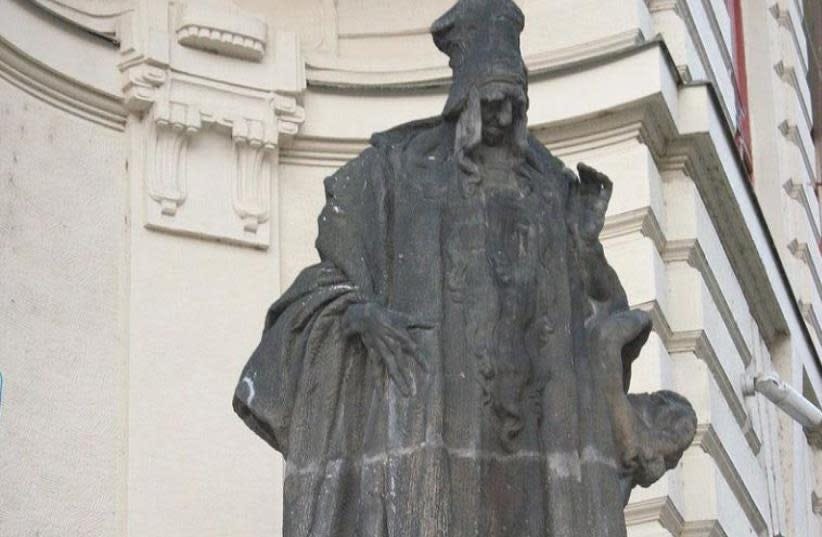
He draws our attention to the structure of the word אמת, truth. It is made from the letters א, מ, and ת: the beginning, middle, and end of the Hebrew alphabet. Truth, in this symbolic reading, is not merely a correct sentence. Truth has wholeness. It spans reality. It holds together the beginning, the middle, and the end. שקר, by contrast, is made from letters clustered together near the end of the alphabet: ש, ק, and ר. Unlike אמת, it does not span the whole. It is narrow, unstable, and partial. It does not hold reality together. It isolates a fragment and allows that fragment to masquerade as the whole.
This is the philosophical key to the entire problem.
A statement can be factually correct and still become שקר if it presents only part of reality while carrying the force of the whole. A person can avoid telling a technical lie and still participate in שקר if his speech leaves the listener with a distorted total picture.
The Falsehood of the Unfinished Story
Once we understand שקר this way, another rabbinic story becomes much easier to understand.
According to midrashic tradition, Sarah dies after hearing about the Akedah — the binding of Isaac. The details vary across sources, but the basic idea is devastating: Sarah is told that Isaac was taken to be slaughtered, or that Abraham brought him to the point of slaughter, before she hears the end of the story.
And that is the whole point.
The report is not simply invented. Isaac really was taken by Abraham. He really was bound. Abraham really did raise the knife. The danger was real. If one stopped the story at the wrong moment, the conclusion seemed obvious: Isaac was lost.
But the story was not over.
God intervened. Isaac lived. The knife did not fall. The ending changed the meaning of everything that came before it.
This is the falsehood of the unfinished story.
A story can become שקר not because its details are fabricated, but because it ends too early. It presents a middle as though it were an ending. It gives the listener enough truth to wound them, but not enough truth to understand reality.
That is why this midrash belongs beside The garden of Eden. The serpent makes Chava judge God’s warning by the wrong moment: “Did you die immediately?” The report to Sarah makes her judge the Akedah by the wrong moment: “Was Isaac placed on the altar?” In both cases, the distortion comes from premature closure.
The facts are not enough. The sequence matters. The ending matters. The whole matters.
Maharal’s point now becomes concrete. אמת spans beginning, middle, and end. שקר isolates one part and lets it stand as the whole. Sarah is not destroyed by a random fiction. She is destroyed by a fragment that arrives dressed as reality.
Abraham, Moshe, and the Refusal of False Wholeness
Should שקר (false hoods) be the presentation of partial reality as though it were whole, and אמת (truth) the full picture of reality, then an obvious problem arises: how can human beings ever engage in truth?
We are finite. We never possess the whole picture. We see fragments, moments, impressions, patterns, and pieces of stories. We speak before we know the ending. We judge before we see every consequence. We act from inside history, not from above it.
So if truth requires wholeness, does that mean human speech is doomed to שקר?
The problem is not that human beings speak from partial knowledge. We have no other kind. So, the problem begins when partial knowledge is presented as complete. Truthful speech, then, is not speech that pretends to possess the whole. It is speech that remains faithful and honest to the fact that it does not.
According to Genesis, God tells Abraham that the outcry against Sodom and Gomorrah is great and that their sin is severe. God is preparing to destroy the city. That means everyone inside the city is facing the same judgment: the wicked, the innocent, and any righteous people who may still live there.
Abraham does not simply accept that. He asks God whether He would really destroy the righteous together with the wicked. What if there are fifty righteous people in the city? What if there are forty-five? Forty? Thirty? Twenty? Ten?
What is Abraham doing?
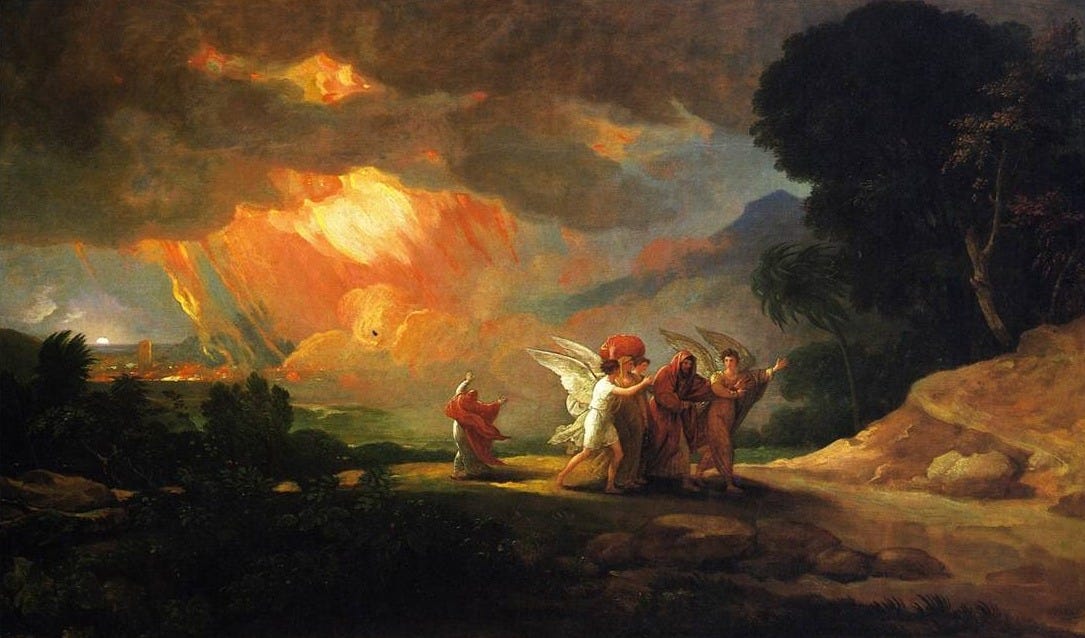
He is asking whether “Sodom is wicked” is the whole truth. If righteous people live there, then the moral picture is not complete. The city may be guilty as a whole, but that does not mean every person inside it belongs under the same judgment.
This is the opposite of שקר. שקר takes a partial picture and lets it stand as the whole. Abraham does the reverse. He takes what looks like a complete judgment and asks whether important parts of reality have been left out.
According to Exodus, God appears to Moshe at the burning bush and tells him that He has seen the suffering of the Israelites in Egypt. God tells Moshe that He is sending him to Pharaoh to bring the Israelites out of slavery.
Moshe does not simply accept the mission as if everything is clear. He asks God, “Who am I that I should go to Pharaoh?” Then he asks what he should say if the Israelites ask for God’s name. Then he worries that they will not believe him. Then he says he is not a man of words. Finally, he asks God to send someone else.
At first, this can look like weakness. But in the framework of this essay, Moshe is doing something important. He is not pretending the situation is complete when it is not. He does not pretend his authority is obvious. He does not pretend the people will automatically believe him. He does not pretend he has the words for the task.
He names the gaps.
That is the opposite of שקר. שקר presents a partial picture as whole. Moshe refuses to do that. He illuminates the incompleteness with speech. And because he does, God answers each gap: He gives Moshe signs, language, reassurance, and finally Aaron as a speaker.
Moshe’s questions do not destroy the mission. They make the mission more complete.
That is truthful speech. Not speech that already possesses the whole picture, but speech honest enough to admit what is missing.
Where Does This Leave Us?
It means we are responsible not only for the sentences we speak, but for the picture of reality our speech creates. It is not enough to say, “I never said that.” It is not enough to hide behind technical accuracy, implication, sarcasm, opinion, or the claim that the audience “drew its own conclusion.”
The question is not:
Did I say something false?
The question is:
Did I make something partial appear whole?
Now, this does not mean human beings must speak with perfect knowledge. That would be impossible. Abraham did not know the full moral condition of Sodom. Moshe did not know how the Israelites would receive him. Truthful speech is not omniscient speech.
Truthful speech is speech that knows it is not omniscient, and makes sure that all who hear understand it as such.
It leaves room for what it does not know. It marks its boundaries. It does not confuse a safeguard with the prohibition. It does not confuse a fragment with the whole. It does not turn suspicion into certainty, silence into guilt, or one fact into an entire person.
This is why Jewish thought places such strict boundaries around speech. Lashon hara is forbidden even when true because a true statement can still create a false picture of a human being. Geneivat da’at is forbidden because deception can happen through impression, not only through explicit words. A סייג is valuable only when people know it is a fence. Once the fence is presented as the command itself, even protection can become distortion.
The modern loophole says:
I did not technically lie.
The Jewish answer is:
But did you create שקר?
That question is harder and yet, it is also more honest.
Because the deepest falsehoods are often not the easiest ones to fact-check. They are the ones built out of real fragments, arranged in the wrong order, stripped of proportion, repeated with confidence, and presented as final. They do not always ask us to believe a false sentence. They train us to inhabit a false world.
That is why the Torah begins its account of human catastrophe with speech. The serpent does not destroy humanity by force. He does not need to. He narrows the frame until falsehood feels like common sense.
Against that, אמת demands more than accuracy. It demands humility before the whole.
That is why the Torah begins its account of human catastrophe not with violence, but with speech. Not with a sword, but with a sentence. The first thing that breaks in the human story is not a body, it is a picture of reality.
And that choice is deliberate. The Torah could have introduced mortality through any number of events. It chose this one: a conversation, a frame, a narrowed window through which the whole of God’s warning was made to look like an overreaction. The serpent did not need to forge a document or bribe a witness. He only needed to control what Chava was looking at and for how long.
We have inherited that vulnerability. We are still, all of us, susceptible to the well timed fragment, the question that implies its own answer, the story that ends one scene too early.
Against that, אמת demands more than accuracy. It demands humility before the whole. It demands the courage to say: here is what I know, and here is where my knowledge ends. Not silence — Abraham spoke, Moshe spoke — but speech that carries its own incompleteness honestly, rather than smuggling certainty in through the back door.
Perhaps that is where truthful speech begins: not in knowing more, but in refusing to let what we know pretend to be more than it is.
And perhaps that refusal is small, unglamorous, practiced one conversation at a time is its own kind of repair..
Sources and Further Reading
Tucker Carlson / Karen McDougal defamation case
Court opinion in McDougal v. Fox News Network, LLC, where the court held the challenged Tucker Carlson statements were not actionable because, in context, they were rhetorical hyperbole and opinion commentary rather than factual assertions.
Basic U.S. defamation law
Cornell Wex overview of defamation law, including the requirement of a false statement purporting to be fact.
https://www.law.cornell.edu/wex/defamation
Actual malice / New York Times v. Sullivan
Cornell Wex explanation of the “actual malice” standard for public officials/public figures.
https://www.law.cornell.edu/wex/new_york_times_v_sullivan_%281964%29
Milkovich v. Lorain Journal Co.
Supreme Court case explaining that “opinion” is not automatically protected if it implies a provably false factual assertion.
https://supreme.justia.com/cases/federal/us/497/1/
Hebrew word שקר / sheqer
Lexical entry showing שקר as lie, deception, falsehood, deceit, fraud, wrong, and related meanings.
Genesis 2–3 / Eden narrative
Chabad Tanakh text of Genesis 3, including Chava’s “do not touch” statement and Rashi’s comment that she added to the command.
Rashi on Genesis 3:3
Rashi explains that Chava added “do not touch” to the command, leading to diminishment.
Avot DeRabbi Natan 1:5
Rabbinic source describing Adam adding the fence, the serpent touching/shaking the tree, and Chava being misled.
Bereishit Rabbah 19:3 / serpent and the fence
Related midrashic tradition about the serpent exploiting the added “do not touch” boundary.
https://www.sefaria.org/Bereishit_Rabbah.19.3
Pirkei Avot 1:1 — “Make a fence around the Torah”
Mishnah source for the concept of a סייג, a protective fence around Torah.
Rambam / Bartenura on “make a fence”
Commentarial explanations of סייג as protective decrees or safeguards that keep a person from violating Torah law.
Maharal on אמת and שקר
Yeshivat Har Etzion essay summarizing Maharal’s teaching that אמת spans beginning, middle, and end, while שקר is narrow and partial.
Better direct article: https://www.etzion.org.il/en/philosophy/great-thinkers/maharal/torat-hamiddot-haemet-vehaemuna
Talmudic background on אמת and שקר
Shabbat 104a discusses the symbolism of the letters of אמת and שקר.
https://www.sefaria.org/Shabbat.104a
Abraham arguing with God over Sodom
Genesis 18: Abraham asks whether God would destroy the righteous with the wicked and negotiates from fifty righteous people down to ten.
Direct text: https://www.sefaria.org/Genesis.18
Moshe at the burning bush
Exodus 3–4: Moshe questions God’s mission, asking “Who am I?”, what name to give, whether Israel will believe him, and saying he is not a man of words.
https://www.sefaria.org/Exodus.3
https://www.sefaria.org/Exodus.4
Moshe striking the rock
Numbers 20: God tells Moshe to speak to the rock; Moshe strikes it; water comes out; God says Moshe failed to sanctify Him before Israel.
Direct text: https://www.sefaria.org/Numbers.20
Lashon hara as true but forbidden speech
Torah.org / Chofetz Chaim overview explaining that lashon hara can involve true negative speech, while false slander is motzi shem ra.
Lashon hara details
Torah.org article explaining that truthful negative information can still be forbidden.
Speaking lashon hara for constructive purpose
Overview of the strict conditions under which negative speech may be permitted for a constructive purpose.
Geneivat da’at / stealing the mind
Article explaining geneivat da’at as deception, creating a false impression, or causing someone to form an incorrect conclusion, even beyond explicit lying.
Talmudic source for geneivat da’at
Chullin 94a: “It is forbidden to deceive people, even a non-Jew.”
Direct text: https://www.sefaria.org/Chullin.94a
Rambam on deception and truthful speech
Mishneh Torah, Hilkhot De’ot 2:6, on truthful speech and avoiding deception/fraud.
https://www.sefaria.org/Mishneh_Torah%2C_Human_Dispositions.2.6
“Distance yourself from falsehood”
Exodus 23:7: “Keep yourself far from a false matter.”